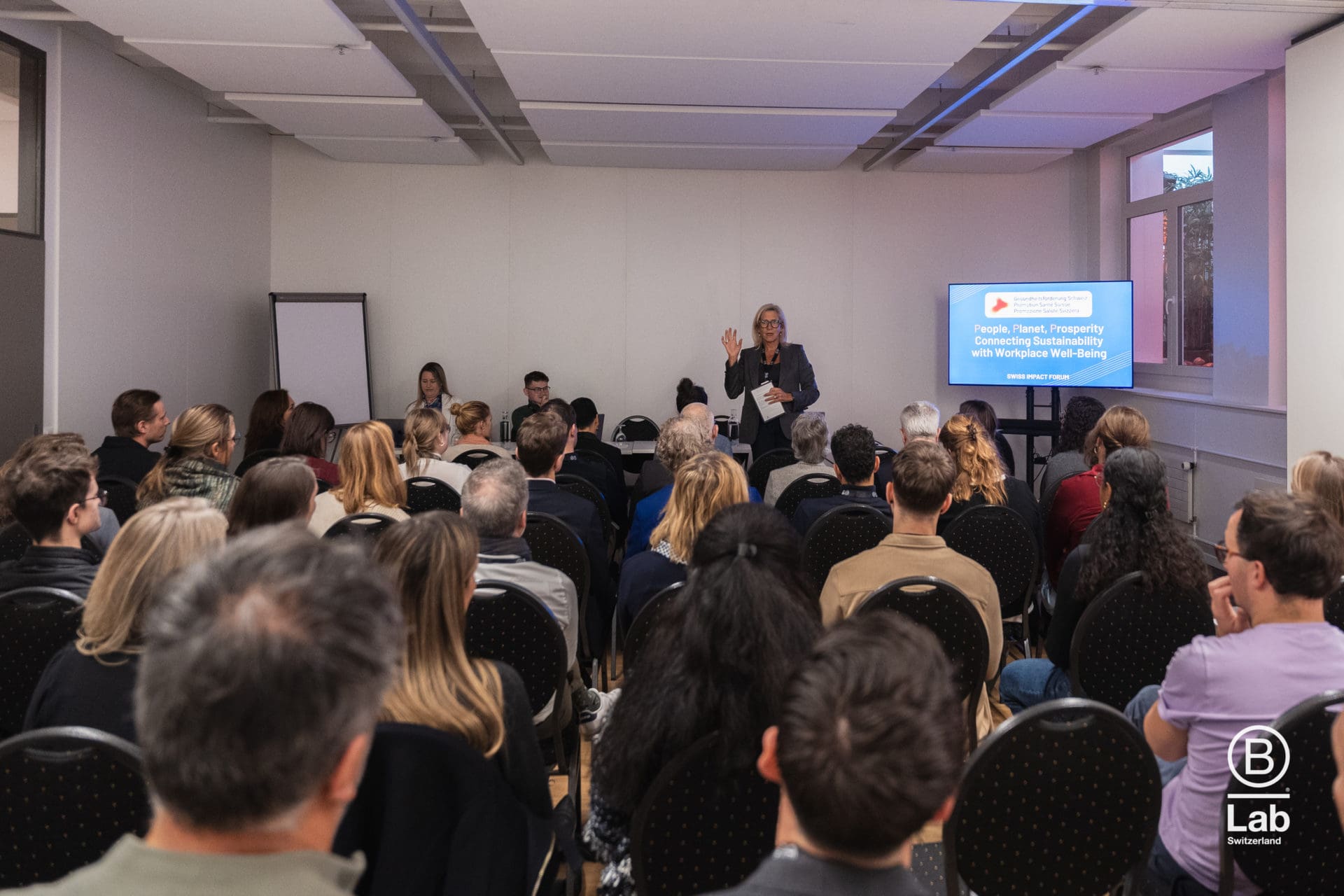
On November 12th, more than 450 leaders gathered at the Swiss Impact Forum in Bern — a powerful cross-section of businesses, NGOs, academics, and policymakers committed to shaping a more sustainable future for Switzerland.
Yet amid the progress, a persistent blind spot surfaced again and again:
We are accelerating environmental sustainability, but neglecting the human beings doing the work.
Across the conversations that followed my session, leaders voiced a shared concern:
“We are trying to build a green business with a burnt-out workforce.”
At the same time, many working in health and well-being expressed the inverse:
“We’re focusing on people, but ignoring the systems that shape their daily reality.”
This is the gap.
And it’s time to close it.
The research from my presentation highlighted one simple truth:
Sustainability cannot succeed without healthy humans.
And human well-being cannot thrive in an unsustainable system.
A few examples:
Leadership engagement is the strongest predictor of both sustainability outcomes and well-being outcomes.
And still, fewer than one in four CEOs meaningfully link sustainability and well-being in strategy.
Many organizations are racing to meet environmental goals, achieve certifications, or comply with evolving European regulations. But behind the dashboards and KPIs are human beings facing:
You cannot advance sustainability with a workforce running on empty.
No amount of reporting can compensate for a culture of exhaustion.
On the other hand, we cannot promote wellbeing — resilience, emotional health, connection, digital balance — if the broader organization remains unsustainable.
A workplace wellness initiative means little if the system itself is draining, misaligned, or environmentally irresponsible.
Human sustainability and environmental sustainability share the same goal: long-term capacity to thrive.
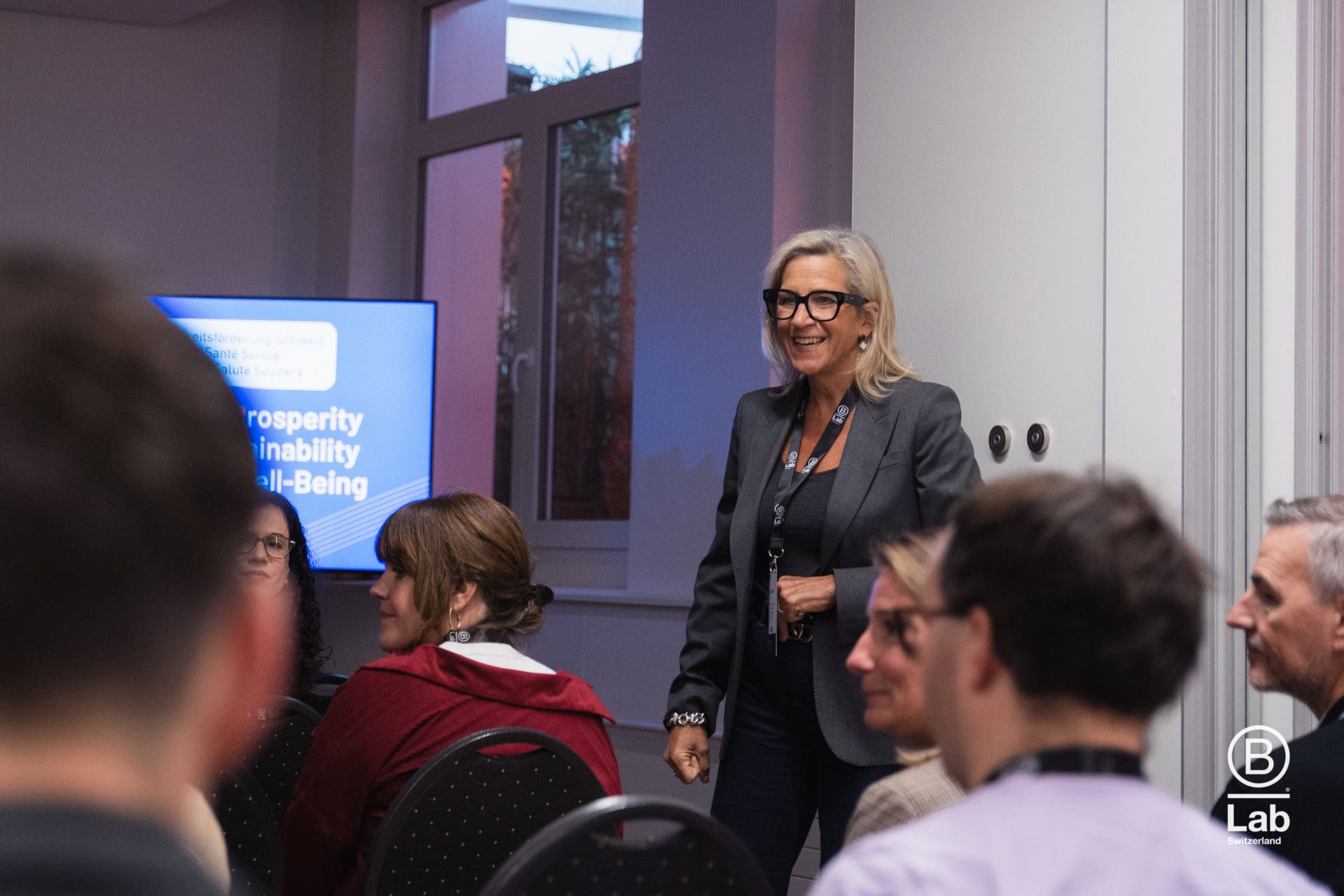
The strongest insight to emerge in Bern was this:
Integration begins with leadership example.
Leaders must visibly model healthy work habits, realistic expectations, and human-centered sustainability.
But true integration also requires the opposite direction:
A bottom-up commitment to listening.
We must ask people — consistently:
Strategies designed without listening are rarely effective.
Leaders understood this deeply — and asked for tools to act on it.
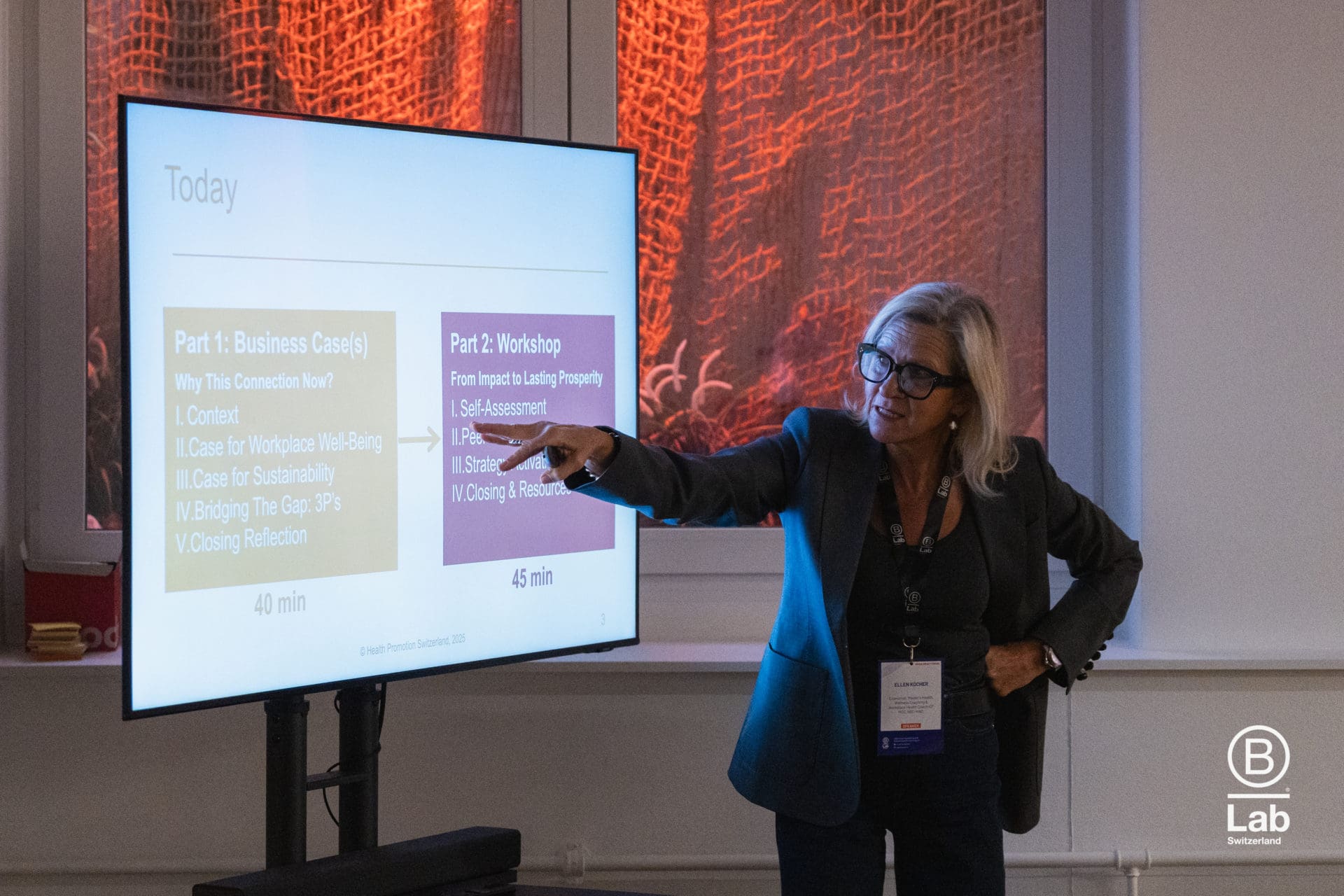
This is where Switzerland has a unique opportunity.
B Lab Switzerland brings structure, governance, and environmental expertise.
Health Promotion Switzerland brings science-based frameworks for human health and culture.
Together, they create a shared Swiss approach to People + Planet + Prosperity.
The Swiss Impact Forum revealed a clear truth:
Leaders are ready for integration.
They want alignment.
They want education.
They want collaboration.
They want to break the silos.
And Switzerland already has the right partners to make it happen:
B Lab Switzerland and Health Promotion Switzerland.
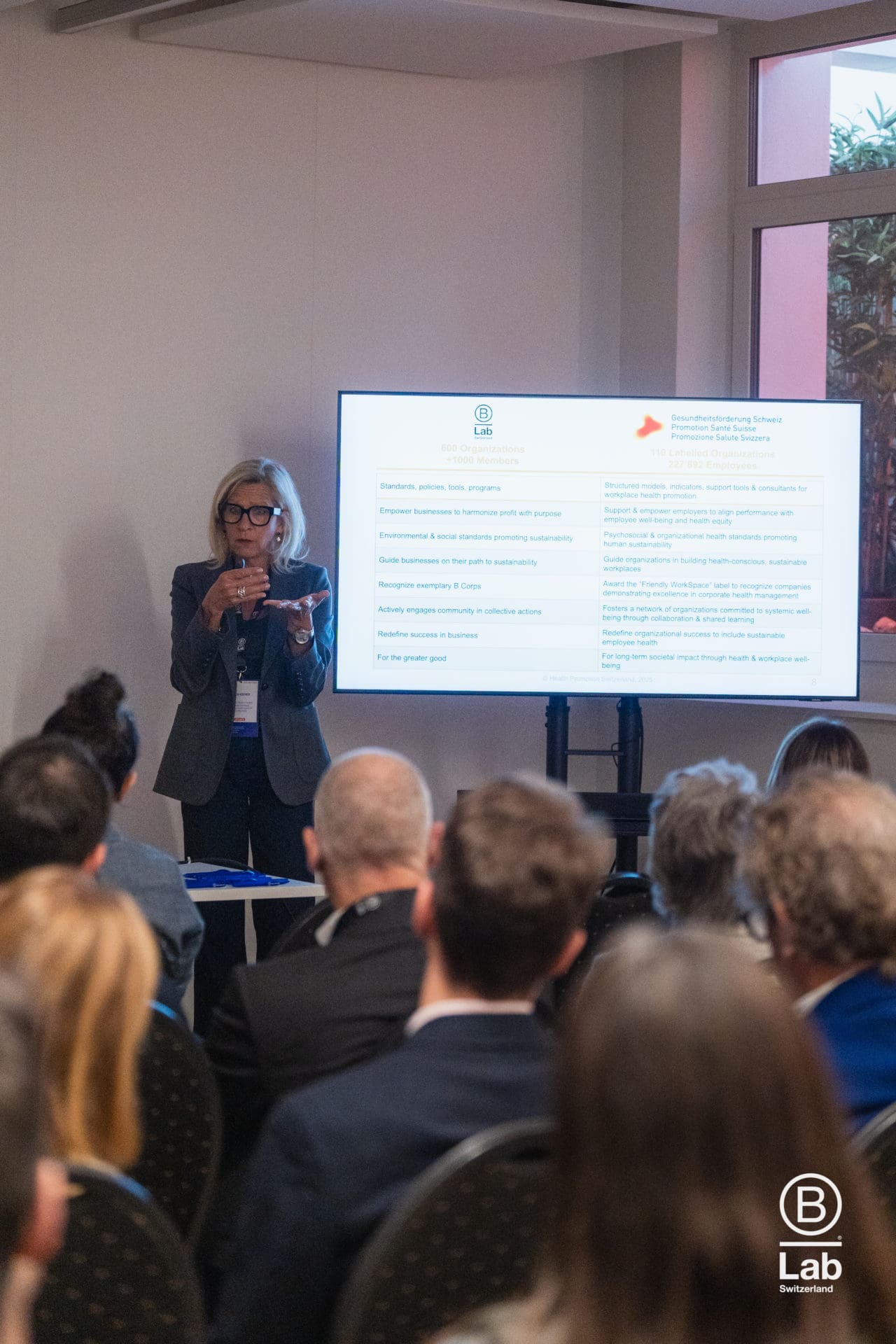
B Lab Switzerland (B Corp movement) — driving environmental and social performance, circularity, ethical governance, and long-term sustainability.
Health Promotion Switzerland (Workplace Health Management) — strengthening physical, emotional, mental, and social well-being in organizations through proven frameworks and metrics.
Both are essential.
Both are credible.
And now, they are joining forces.
By working together, B Lab Switzerland and Health Promotion Switzerland highlight a simple but powerful truth: a healthy planet depends on healthy people. Sustainability and well-being are not separate agendas — they reinforce each other. This collaboration shows how organizations can embed both environmental responsibility and human flourishing at the core of their strategy.
The future belongs to organizations that harness the full power of their people while caring for the planet that sustains them.
You cannot build a green business with a burnt-out workforce.
And you cannot sustain healthy people in a broken system.
The time for integration is now.
In Case You Missed It
If you were unable to attend the Swiss Impact Forum session, you can download the full slide deck — a practical, research-backed resource to spark conversation and action.
I am also available to deliver this talk or facilitate a workshop for your leadership teams, sustainability community, or workplace well-being initiatives. If collaboration or education in this space resonates, I would be delighted to explore possibilities together.
By Ellen Kocher, Accredited Corporate Wellness Consultant, Masters Health & Wellness Coaching


